
Written by Carol Roper

The first time I saw him, the pup was cowering against the security wall of a big Airbnb hacienda next to Guillermo and Fabiola’s ancient, white trailer. Our street was a mix of new and old homes. Their two big dogs, Sultan, a handsome black-and-tan Husky mix, and his mother Babu, a chubby blonde Labrador had literally scared the piss out of the poor baby who looked to be about five months old.
Someone had dumped it there before dawn was my guess because that was when the dog’s yapping had woken me. After a putting a pillow over my ears failed, I got out of bed, pulled on yesterday’s pink shirt and jean and sneakers, left my little, Chihuahua-terrier mix, Micki sleeping in bed and walked the dusty street near the beach where I’d settled a year earlier.
Seeing what was happening at the corner, I moved swiftly between the pup and his tormentors, firmly ordering them to, “Quit it.”
And they did.
Turning to the cinnamon-colored pup, I gently greeted it, “Hello, puppy, what are you doing here?”
It backed up. So did I. Usually, Usually I had dog treats in my jean pockets, but digging around with my fingers, found only kibble dust.
The last thing I wanted was for the pup to take off, possibly into worse circumstances. Also, in the back of my mind tinkled the idea that maybe the Universe had provided a dog compatible for Micki and me. We’d been looking on and off for one for awhile.
“Don’t go anywhere,” I said, and hurried back to my place for kibble and water. When I returned the scene had not changed.
Sultan and Babu perked up at the sight of me and food.
“Not so fast, you two.”
Raising the bowl above my head, I pivoted to place it before the puppy who was too hungry for caution. He dove in headfirst, wolfing the food down in seconds. Then stepped back to groom himself and seconds later stood, revived, bounced forward and ducked his head in front of Sultan in the classic sign language of a dog who wants to play.
A startled Sultan jumped up, tentatively sniffed the pup and seconds later the wrestling was on. They were friends.
Seeing I was no longer needed, I picked up the empty bowl and turned to leave.
Passing Guillermo and Fabiola’s ancient white trailer, with its two-story cement addition built alongside it for their adult children and two grandchildren, I saw Guillermo watching me from behind his kitchen window. I didn’t know for how long he’d been there, but he didn’t look pleased.
He and his wife, Fabiola with her beautiful smile and thick white hair had lived on this dusty street long before there were city sewer connections, street lamps and new homes covering what had been empty lots in their semi-rural community near the beach that was now being rapidly gentrified.
We were not on the best of terms as I had inadvertently offended him.
I was the newcomer to the street, though I’d lived in Mexico for over a dozen years and much had changed.
When I first arrived in Mexico, President Barack Obama had just been re-elected. A popular President who visited Mexico numerous times emphasizing the family, cultural and economic ties between the two countries. In general, we were liked in Mexico.
Four years later came the election of a man who spewed hatred like an ocean oil spill polluting everything it touched. Many of us worried how it might negatively affect us. Some U.S. migrants had signs made that read, “We Love Mexico” and hung them outside their homes.
Then came Covid. World Borders closed as did whole cities. Social life in Mexico came to a standstill. Everything that could be done from home on computer and by phone; work, school was how we lived for six months. And when Covid was declared, “over.”
We all emerged. Some of us still wore our blue masks.
The USA-Mexico border reopened. And an influx of younger remote workers crossed south and rented homes from the beaches of Baja California to Ciudad de Mexico in search for “la Vida mejor.”
Working for US companies, didn’t require one to be bilingual. Being paid in dollars at a time when the currency exchange rate for a peso was twenty to a dollar, they found themselves comparatively rich. Able to afford a life in Mexico they could only dream of in the expensive USA. It was like discovering a rich vein of gold, and they spent it. Property owners raised rents driving out their long-term Mexican tenants and Americans moved in paying what still seemed a bargain compared to costs north of the border.
Mexican Realtors, property owners and service providers welcomed the new money influx, the average middle-class Mexican did not. They correctly saw their buying power slipping away to foreigners, many of whom had not bothered, or didn’t know they needed at the least a tourist visa to be legally in Mexico.
Also negatively affected were aging U.S. retirees who’d been living in Mexico from the time when one could, “Live like royalty on $1000 dollars a Month.” They’d settled in communities near the northern border to cross for their Medicare or VA benefits. Now they faced double and triple rent increases at a time when they weren’t getting any younger and moving back to the USA was never an option.
On the positive side, an influx of well-to-do US migrants and wealthy Mexicans were responsible for the growth of new housing that kept construction companies and workers employed, purchased materials, inspired investments and increased workers incomes. Previously marginal Mexican communities were transformed into affordable gated housing for the middle-class Mexican family, purchased with mortgages from the Mexican government.
Not surprisingly, visitors and migrants from the USA felt a subtle and not so subtle, coolness where they had previously felt welcome.
Protests and “Gringo Go Home” signs appeared in Mexico City and other popular Mexican cities.
On the street I chose to buy a property and live on most of my neighbors were pleasant and polite. Though, none ever invited me in for a cop of coffee or glass of wine as I did with them and at least one elderly man was well-known for his dislike of, “Gringos.”
My mistake with Guillermo was offering to take Sultan and Babu with me when I took Micki for her annual vaccines.
“My dogs don’t need it,” Guillermo had snapped in a tone indicating I was unwelcome.
Perhaps he thought I was being a nuisance while I thought I was being neighborly. Two things can be true at the same time.
Maybe he had already laid claim to the pup. I didn’t want to raise his ire. I’d play it safe and leave the idea of adopting the pup alone. I Passed his kitchen window and pretending not to see him watching me.
Which turned out to be the correct decision.
The tan-colored pup joined Sultan and Babu’s pack, but didn’t share their status. While the son and mother slept in the fenced parking area beneath the two story addition to their trailer, the pup was not allowed on their property. He slept on the street in all weather outside their chainlink fence.
The nameless pup began hanging out near my front gate before dawn, warming himself in the rising sun.
Micki preferred to al fresco dining so I always placed her food in a bowl on the deck near the front door. Hearing us on the deck I’d see the pup’s head pop up between the slats of the gate. Then I’d go back inside for a bowl for him and put it him outside the gate.
Watching him develop I thought he had the color and some characteristics of a Labrador and the muscular frame of a Pittie. He was growing fast.
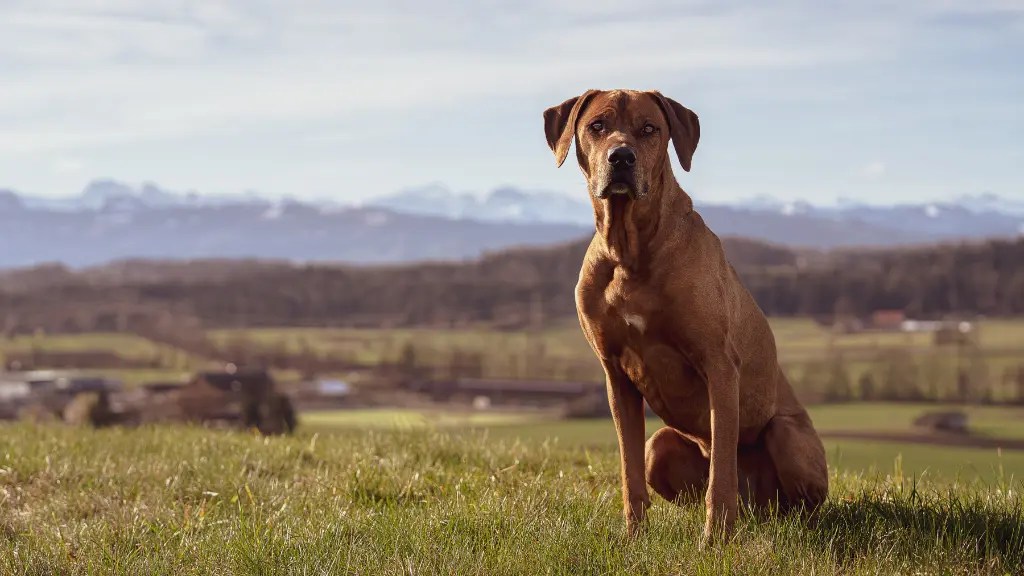
If I was working in the garden, he’d stand at my gate on hind legs to watch me and push his head between the slats for me to scratch him and murmur about how handsome and sweet he was. But he still refused to enter whenever I opened it and invite him in.
The pup was affectionate and playful and followed Micki and I on our daily walks. I sometimes had to warn him to be gentle with my senior dog. “Micki is an old lady,” I’d tell him, “Like me.” Secretly, I called him “Rowdy.” It suited his personality.
When I bought an anti-parasitic for Micki at my uptown Vet, I showed him a showed a short video of Rowdy on my phone to estimate his weight for an anti-parasitic. “He’s large,” my Vet said. Rowdy was large and stool very much a puppy. He gobbled the anti-parasitic like it was choice sirloin.
One day, as I was in the garden trimming lavender, I overheard Fabiola calling “Rowdy,” “Canelo,” him A dog with a name has a human, a family. Despite Franciso’s denials, Canelo belonged to them. Their little granddaughter, Renata, adored Canelo and protected him from Sultan’s bullying him. Even though Canelo was larger and more muscular than his stepbrother, he still recognized Sultan as the alpha and deferred to him.
A couple of months after Canelo, a female dog was dumped on the street. She was brown-and-white female. Skin and bones and appeared to have had at least one pregnancy. She had the floppy ears and sad eyes of a Basset but was taller maybe part pointer. From her ease around humans, it seemed she had been someone’s pet. Of course, no one recognized her. People dump their dogs, if they care in the slightest where there are nicer homes and cars. Neighborhoods that look like they can afford to feed the stray. Like our street.
A reluctance to notify Ensenada City’s Animal Protection was understandable given the infrequency of garbage pickups, and that the public hospital frequently had no medicines; and that teachers who were unpaid for months would on occasion take over the Scenic highway toll booths to collect money owed them. No one believed Animal Protection was a better choice than abandoning a pet in a neighborhood that looked like it had a chance of a home could seem a humane choice.
Anyway, the brown and white female was friendly and seemed to have been someone’s pet. More than once she wanted to jump into my car if I left the door open and had to be stopped. Mainly because she didn’t like little, Micki who wad also a female.
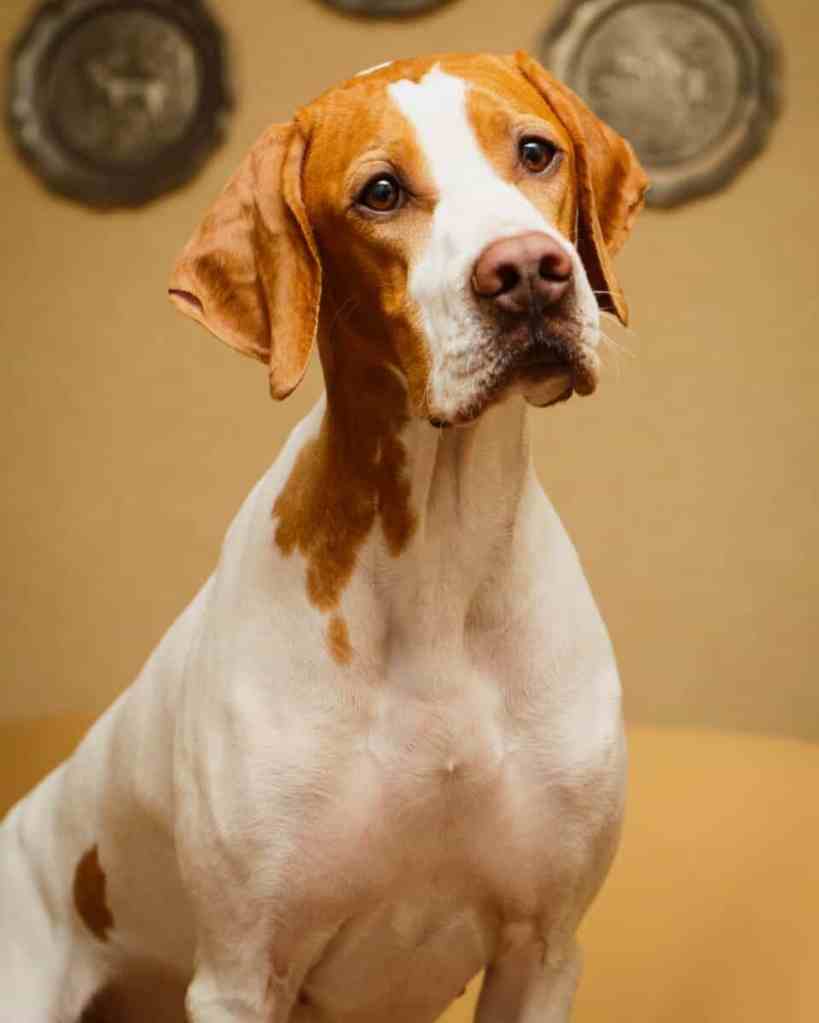
She and Rowdy, uh, Canelo became instant companions. She moved right into the medium size, wood doghouse a neighbor, who moved away had donated for Canelo. I soon had two street dogs waiting outside my gate mornings for breakfast.
They both liked to follow Micki and me on our morning walks, along our walks on the streets where each block seemed to be in a different stage of development. A large new white rectangle building with a rooftop deck, next to a large undeveloped lot with a one room shack, wires running to the nearest electric pole and an above ground sewer pipe that emptied into a hole with a cement cover balanced on it and at the end of ten blocks the Pacific Ocean
Angry dogs often challenged us. I always carried a thick wood pole to ward them off, but when Canelo was with us it wasn’t necessary. He had grown into a large, muscular dog who stood down for no dog. Often, he and she would run back and forth in front of gates behind which were other dogs and set off a cacophony of barks
“Not my dogs,” I’d mutter in Spanish and hurry on.
The female dog taught Canelo to chase cars. One morning as I was drove my CRV toward town and glanced in the rearview mirror, I was horrified to see both dogs trotting after my car. It was a relief when after few streets they lost interest and turned back.
A few months after the nameless brown-and-white female arrived she began to attract male suitors. They sniffed around her as if she were a piece of fruit they were waiting to ripen.
“No puppies,” I thought. She had to be spayed. Soon. Now.
Unless the new dog and Canelo were neutered, there would soon be more unwanted, starving puppies.
I screwed up my courage to share my concerns with Guillermo—that Canelo and the unnamed female needed to be neutered, or we’d soon have puppies to feed.
Approaching him one morning as he wiped the dust off his ancient, dark blue Corolla, after the required polite chitchat precedes any Mexican engagement, I told my concern about puppies
He agreed, no puppies.
And thinking we had an agreement, I told him I’d take care other costs for La Pinta and Canelo and asked if he knew of a nearby veterinarian us who provided at home service.
Now my Spanish and Guillermo’s English, I thought, were about even; but, of course, I was wrong.
He interrupted me to say that Canelo was a young male and there was no hurry he didn’t need to be neutered yet.
Actually, Canelo was one of the dogs that had been sniffing La Pinta like she was a melon.
But I knew not to disagree. Instead, I emphasized that I needed a vet who could pick up and deliver the dogs afterward.”
“They’re not my dogs,” Guillermo said abruptly giving me a terse smile.
I was surprised by his denial and relieved. It meant I didn’t need his permission.
Off I went in search of a veterinarian’s office I recalled seeing a veterinarian sign next to a Paint Store in a plaza off Reforma Boulevard, also known as the Transpeninsular Highway that ran the entire length of Baja California from Tijuana to Cabo San Lucas. It was a heavily used truck route through Ensenada and the only direct exit out of Playa de Chapultepec.
Dodging eighteen-wheelers, as I searched of the sign I’d seen. About a quarter of a mile north I saw the paint store sign, made a sharp right turn into a U-shaped parking lot and there it was a veterinarian’s office.
A young receptionist sat on a stool behind a glass counter with pet meds. Greeting her in my best Spanish. “Buenos tardes.” I asked ¿Tiene servicio a domicilio?”
She gave me a look I knew meant she had no idea what I’d said.
“Can I help you?” A tall, striking-looking woman stepped out of an adjoining exam room. She was the Veterinarian and owner vet. Her name was Dr. Roberta. And yes, she did house calls.
It was hot and dusty when Dr. Roberta arrived that afternoon in a large gray van. As soon as she got out, she was surrounded by the street dogs. I pointed out Canelo and the brown-and-white female who without any urging immediately jumped into the Van’s open rear hatch.
Canelo hung back. He came when I called and welcomed my touch. I tried to keep a grip on him as Dr. Roberta approached with a leash but he was strong and easily pulled away.
Twenty minutes later we were both sweating and Canelo was still loose. Dr. Roberta suggested she take the female and we’d try again to capture when she returned.
I agreed. She reached up to close the vans hatch and stopped.
Inside was Sultan, seated on the passenger seat. Behind him in the rear was the brown-and-white female.
“Sultan, what are you doing in there? Come out,” I coaxed. He ignored me.
“Is he neutered?” Dr. Roberta asked, nodding at Sultan.
I didn’t know but I took a guess, “He must be. He’s at least two years old. He’s my neighbor’s dog”
Dr. Roberta leaned in to the van and slid her hand under Sultan’s belly. He didn’t object.
“He’s intact,” she concluded, straightening up. “What do you want to do?”
Guillermo had objected to Canelo being neutered as too young, but Sultan was at least two years old. A neutered dog has a lower his risk of cancers and other health issues.
I called “Come on, Sultan.” He didn’t move. Sultan had made a decision.
“Take him,” I said. After all, Guillermo had agreed with me, “No puppies.”
Later that day I dropped by Dr. Roberta’s clinic to pay her and help fill out medical cards. She had examined the dogs, given them their vaccines and found they were in good health.
As she filled out a card, she asked for the female’s name.
“She doesn’t have one,” I admitted.
Dr. Roberta gave me a weary look.
“Flor,” I said the first name that popped into my head.
Next, I asked about pills, a tranquilizer or sedative I could give Canelo to make him easier to catch when she returned Sultan and Flor.
She agreed it was worth a try.
The next day I received a call from the Vet Tech thirty minutes before they were to arrive.
Carefully pressing five blue tablets into equal pieces of hot dog. I approached Canelo who as usual rested in front of my gate. He stood as soon as he heard me and gobble up the drugged hot dog.
Dr. Roberta’s gray van arrived. With her this time was a male vet tech who opened the rear hatch of the van.
Sultan and Flor leapt out and were greeted happily by Babu and Canelo.
As the four dogs bounced off each other I realized neither Flor nor Sultan wore oversized plastic cone usual for post-surgery.
“Why don’t they have cones?”
“They don’t need them. I did their stitches internally,” she explained. I’d asked Micki’s vet about her and learned her surgical skills were admired.
Flor stood passively as Sultan in the rear and Canelo was awkwardly trying to hump her head.
“What? Why? What are they doing. Isn’t she spayed?”
“Yes, she’s spayed. She was in heat. I did the surgery, but she still has the hormones in her system. Don’t worry, she can’t get pregnant. This will happen for about another week.”
I felt sorry for poor Flor and worried the roughhousing would tear her stitches.
Dr. Roberta assured me, “The stitches I did will hold.” And they did.
Fabiola and Guillermo’s granddaughter, Renata, came running to greet Sultan, her grandmother and mother close behind. They’d had been worried that Sultan hadn’t come home.
Guillermo stood outside his home, scowling at the scene or maybe he wasn’t, but he wasn’t smiling either.
I introduced Fabiola to Dr. Roberta who handed her copies of the dogs’ health records and a bottle of medication for Flor.
Fabiola seemed not to understand who Flor was.
“La Pinta,” Dr. Roberta explained.
Fabiola’s face glowed with recognition.
Next, we turned to capturing the drugged Canelo. Who was having the best day of his life. The effect of the sedation had seemed to have had the opposite effect. He ran back and forth and in circles eluding all attempts at capture
When Fabiola called Canelo, he came but as the Vet Tech closed in the dog gracefully sprinted away.
Clearly enjoying the game of catch me if you. By then more neighbor had come outside; some to just watch, but others joined the parade children, dogs, myself and Vet Tech trying to entice Canelo as he led us further away from Dr. Roberta’s van and toward the wild over grown river bed at the of the street.
Dr. Roberta called it quits. She had to get back to the office. I thanked her and she said, “Bring him to the office when you catch him.”
“Sure,” I said, knowing the chances of that occurring were slim to none.
From that day on if Guillermo and I happened to, unavoidably, encounter each other, we exchanged brief a cordial greeting, nothing more.
Several months passed. I continued to fed the two big dogs, Canelo and Flor along with my dog, Micki, and occasionally Sultan if he happened to be awake early and saw us.
One morning as I leaned over to place Canelo and Flor’s breakfast bowls down and a few feet apart to avoid him being greedy, I was upset to see dried blood on his head. While he ate which was quick and messy, I saw the source pf his wound was that one of his ears was split and bloody. I found a clean rag and animal antiseptic but Canelo was no more cooperative then my dog. But Micki was small and I easy to pick up. Canelo was large.
No doubt he’d been in a dog fight and Canelo had lost. This was one of my concerns for him, an unaltered dog living on the street was bound to get in fights. He and Flor wandered the beach and streets, chased cars, foraged and were challenged and challenged other dogs. Their freedom had a price and it could be deadly.
Later that morning I needed to drive to Centro for banking and a few other errands. Babu and Sultan were sunning themselves in front of Guillermo and Fabiola’s home but Flor and Canelo were nowhere to be seen. I actually felt relief I didn’t like the couple of time they’d run after followed my car for a few streets before turning back home. I checked my rearview mirror to make sure and didn’t see and the dogs were not there.
The north exit from Playa de Chapultepec was a narrow two-lane street along the new General Hospital under construction. I preferred to use it as it was frequently the faster way out. Apparently, I wasn’t the only person who knew it. I was trapped in the middle of a long line of cars waiting for the red traffic light on Reforma Boulevard to turn green. I happened to glance at my driver’s side view mirror and was horrified by what it revealed: Canelo and Flor were running around cars behind me searching, I instinctively knew they were looking for me.
A vise like fear gripped me. Frantically I looked for a place to pull over. There were none.
The red light turned green. Drivers honked their vehicle horns. I touched my SUV’s dashboard to turn on the blinkers and pressed my foot to the gas pedal, watching the road ahead and my side view and rear view as I turned the most trafficked street in the city. and saw Canelo had recognized my car and was running toward it. A truckdriver braked, hit the horn, cursing in Spanish.
Flor followed Canelo with a terrifying devotion. They wove their way between double-long 18 wheelers and passenger cars and caught up with me as I waited in the third, slower lane along the sidewalk. Once I saw them behind my car I began traveling at ten miles an hour with cars speeding by us a foot away.
Ina panic I screamed incoherently at traffic, at the stupid dogs who didn’t understand this was NOT A GAME! I felt my blood pressure rising, my heartbeat hammering in my ears and then I mentally detached. I went into an altered state. I tried to think but my vision blurred as if I was high on a drug. My dread that the dogs would be killed any moment overwhelmed. There seemed no solution. If I pulled over andpene dthecar door, Flor would jump in,but not Canelo.
Vehicles honked as they sped by.
What was I going to do? What was I going to do?
And then like the star of Jerusalem. I saw the Paint Store sign ahead.Dr. Roberta’s office was there. Driving that last block felt like I was in on a road that never ended but finally, I was turning the wheel of my car and driving into the parking lot. I slammed on the brake, threw the car door open, jumped out and there was Canelo looking at me with what I swear was a grin on his muzzle as if he’d played a wonderful joke.
Flor, his co-conspirator hung her head, as if she knew she’d done something wrong, though her tail swished back and forth.
I rushed past both of them and shoving the door of the Vet’s office wide open, saw the male Vet Tech sweeping the floor. He looked up startled.
“Please,” I shouted, “l need help.” No doubt I looked as wildly out-of-control as I sounded. “The dogs are following my car. I’m afraid they’ll be killed,”
Flor trotted in straight to the Tech assistant and rubbed her face against his pants leg.
Dr. Robert hearing a commotion, stepped into the reception area,
“Well, Good morning,” she said, gazing past me.
Turning my head, I was relieved to see Canelo was standing in the doorway.
“They’ve been following my car. He has a split ear. I think he was on a fight.”
“We’ll take care of him.”
I looked at Canelo. The big, muscular dog who’d once led us on a merry chase, stood now like a timeless fresco. His dangerous, and for me terrifying, game of bolting through traffic had led to the exact place where he could be helped and where he and Flor had their best chance of finding homes off the street.
I was grateful and would miss them for a longtime after.
Carol Roper
August 2026
Copyright Carol Roper 2026
This work is licensed under a Creative Commons Attribution-Noncommercial-No Derivatives 4.0 International License. Under the following terms: Attribution — You must give appropriate credit, provide a link to the license, and indicate if changes were made. You may do so in any reasonable manner, but not in any way that suggests the licensor endorses you or your use. Noncommercial — You may not use the material for commercial purposes. No Derivatives — If you remix, transform, or build upon the material, you may not distribute the modified material.


Leave a Reply